

What Executives Actually Want to Hear Before Approving a Budget
The Top 10 Technical and Financial Questions from Leadership
1. “Do we actually need this change right now?”
- My Tip: Start with a simple “pain-to-impact” sheet. Show them exactly how much the current chaos is costing the business each month.
2. “How do we measure success without guessing?”
- Operational: Processing time on the floor or automation speed.
- Financial: Direct profit margin per client or reduced waste material.
- People: How fast your staff actually adopts and logs into the new system.
3. “How much will it cost—and what is the exact return?”
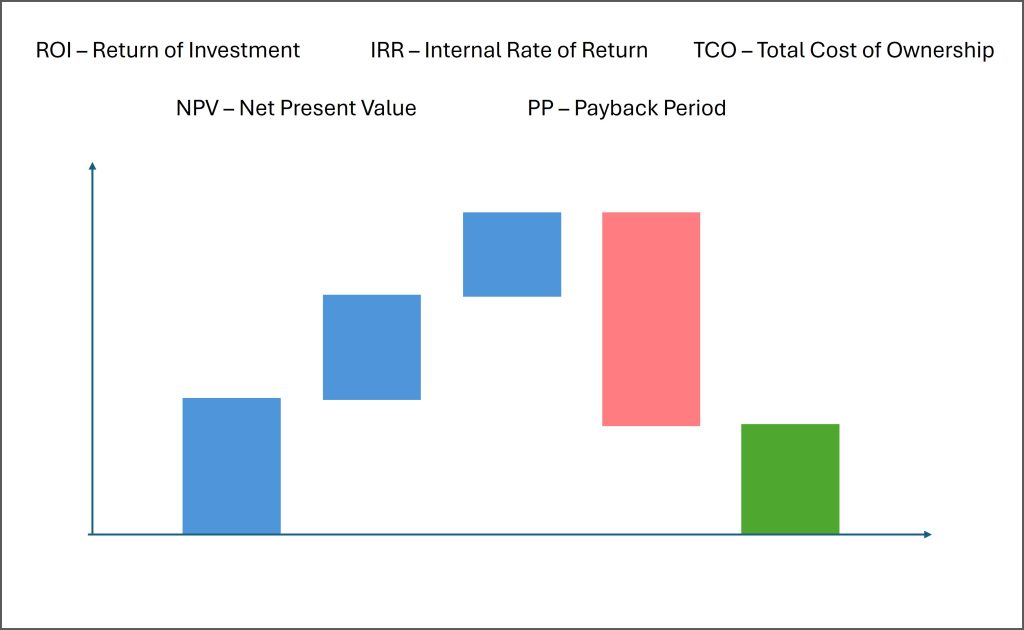
CEOs are rarely looking for the cheapest software. They are looking for an investment they can easily justify to the board. To answer this, you must build a realistic model that answers: What do we invest, what do we get back, and when does the money hit the account? Always use solid metrics like Payback Period, Net Revenue Retention (NRR), and Profitability Index (PI).
4. “Do we have the right people for this?”
5. “Is this secure? Are we risking our data or clients?”
Security is not just an IT department issue; it is a critical business risk. Every tech change opens up new doors for phishing, financial fraud, and ransomware. Following the NIST framework, your strategy must include a practical risk check, a zero-trust approach, and immediate training for the people handling the data.
Managing Timelines, Vendor Risks, and Employee Resistance
6. “How long will it take, and what if we hit a roadblock?”
Executives don’t like surprises and long delays. That is why you should never try to implement a massive software update on a company all at once. Break the rollout into clear, controlled phases. Whether you are installing a CRM, an MES system, or an e-commerce platform, each phase needs its own timeline, dedicated resources, and a backup plan.
7. “Who needs to be in the room for these decisions?”
8. “How do we know we aren’t just chasing tech trends?”
- Real Industrial Example: A manufacturing CEO I worked with was completely against spending capital on IoT sensors—until I showed him how tracking energy waste and material efficiency would pay back the entire investment in under 20 months.
9. “Will our people actually use the new system?”
Staff resistance is the number one reason software investments die. This happens because companies buy a tool but forget to train the users, or they force a system that the team simply dislikes (technology resistance). Digital adoption is an ongoing training process, not a software plugin. You need to build internal “digital champions” on the floor who can help their colleagues handle the transition without stress. Before picking up a new software, check internally with users preference.
10. “How do we manage transformation while running the business?”
Suggestion to read five moves which shall be made during a digital transformation.
Explore More About Digitalization and Business Transformation
Recommended Reading
10 Key Questions Every CEO Must Ask Their IT Team
Decision-Making Frameworks Every CEO Can Use to Prioritize Investments
If you want to see how different projects have improved processes, optimized costs, and increased efficiency through digital transformation, visit our digital outcomes section. If you see challenges in your business or would like to discuss different digital solutions, please feel free to visit the contact page.