
Why Digital Maturity Comes Before Digital Transformation
If you’re leading a small or mid-sized company and thinking about digitalization, you should ask yourself one critical question before investing in a new CRM, an AI solution, or any kind of automation: Where are we right now?
Many companies skip this basic step. They jump straight into buying tools and end up with serious problems:
- They start tech projects that are not actual business priorities
- They invest in complex systems that their team isn’t ready to use
- They burn money, waste valuable time, and lose the trust of their own employees
Why Digital Maturity Assessment as a Starting Point
-
- The actual tools your team uses every day.
- The manual processes you have successfully automated.
- The digital skills of your current staff.
- Whether your company culture welcomes change.
- How well your tech setup supports your business goals.
The Real Difference Between Buying Tools and Being Digitally Mature
How to Run a Digital Maturity Assessment: Key Dimensions and Assessment Criteria
Measuring where you stand requires a structured look at a few practical areas. A reliable review checks your workflows, your people, and your tech architecture at the same time. If one area is weak, it will stall all the others. Here’s how:
Process Mapping & Everyday Workflows
Where are your workflows already digitized? Where are Excel sheets, paper forms, or ad-hoc steps still in use?
Technology Infrastructure & Security
What tools are in use? Are they integrated? How large is your technical debt? Is there a cybersecurity policy in place? Are you compliant with regulations like NIST or GDPR?
Team Competence & Training
Does your team know how to use the tools? Do they receive training and support? Or are the tools being bypassed?
This Is a Business Metric — Not an IT Project
A Practical SMB Framework for Measuring Readiness
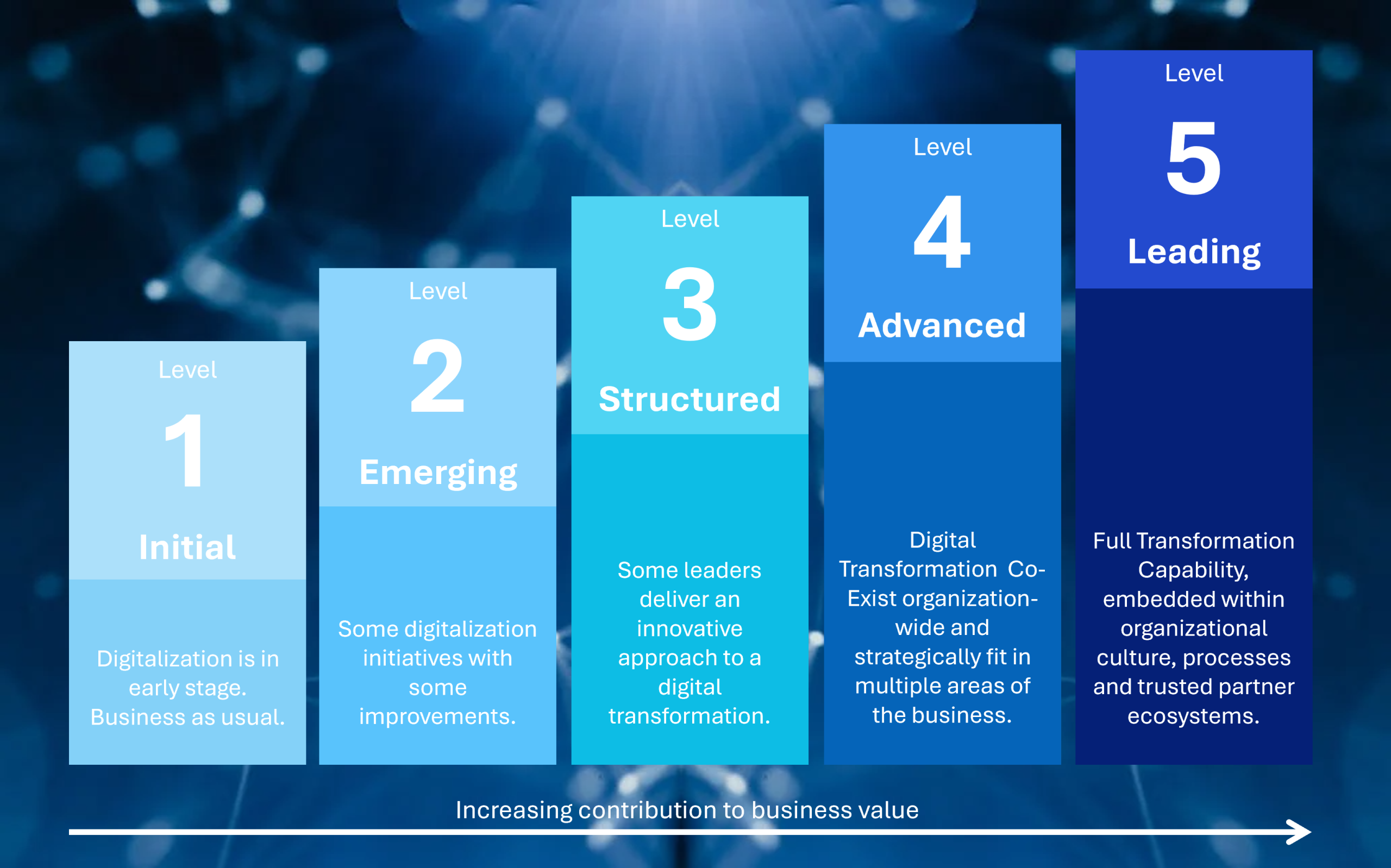
- Are systems connected and automated? Emerging (2/5)
- Are processes there and are there digital workflows? Structured (3/5)
- Do teams use tools as part of their daily work? Initial (1/5)
- Is there a digital roadmap and strategy in place? Emerging (2/5)
According to a McKinsey study on transformation success, more than 70% of digital projects fail not because of the technology itself, but because the organization lacks the cultural and operational maturity to adapt to it. Building up your maturity score is what ensures your investments build your business value.
Case Study: Running the Assessment in an 80-Employee Company
What I Found on the Floor
- They were paying for 4 different software tools, but none of them were integrated.
- The sales team used a CRM, but marketing was still managing leads in Excel.
- They had zero KPIs to measure if their tech tools were actually working.
What We Did
The Real Outcome
Common Mistakes Small and Mid-Sized Businesses Make
-
- Launching new software without checking their current operational state.
- Focusing strictly on buying tools instead of fixing broken processes.
- Relying entirely on outside tech vendors without keeping internal control over the project.
- Failing to track KPIs, which leaves them blind to whether the project actually succeeded.
The Hidden Costs of Buying Tools Blindly
When you buy software without the right maturity level, you create massive hidden costs. Employees resist the change, adoption rates drop, and people start using unauthorized side-tools (Shadow IT). Over time, you end up with wasted investments and operational headaches instead of efficiency gains.
The Practical Benefits of Knowing Your Position
-
- Clear picture on exactly where your processes are stuck and why.
- A roadmap for company growth instead of expensive guesswork.
- Better budget control, ensuring you only spend money on high-ROI projects and initiatives.
- Better alignment between your tech needs and your actual business goals.
Explore More About Digitalization and Business Transformation
Recommended Reading
10 Key Questions Every CEO Must Ask Their IT Team
Why Transformations Fail Before Technology Even Starts
If you want to see how different projects have improved processes, optimized costs, and increased efficiency through digital transformation, visit our digital outcomes section. If you see challenges in your business or would like to discuss different digital solutions, please feel free to visit the contact page.